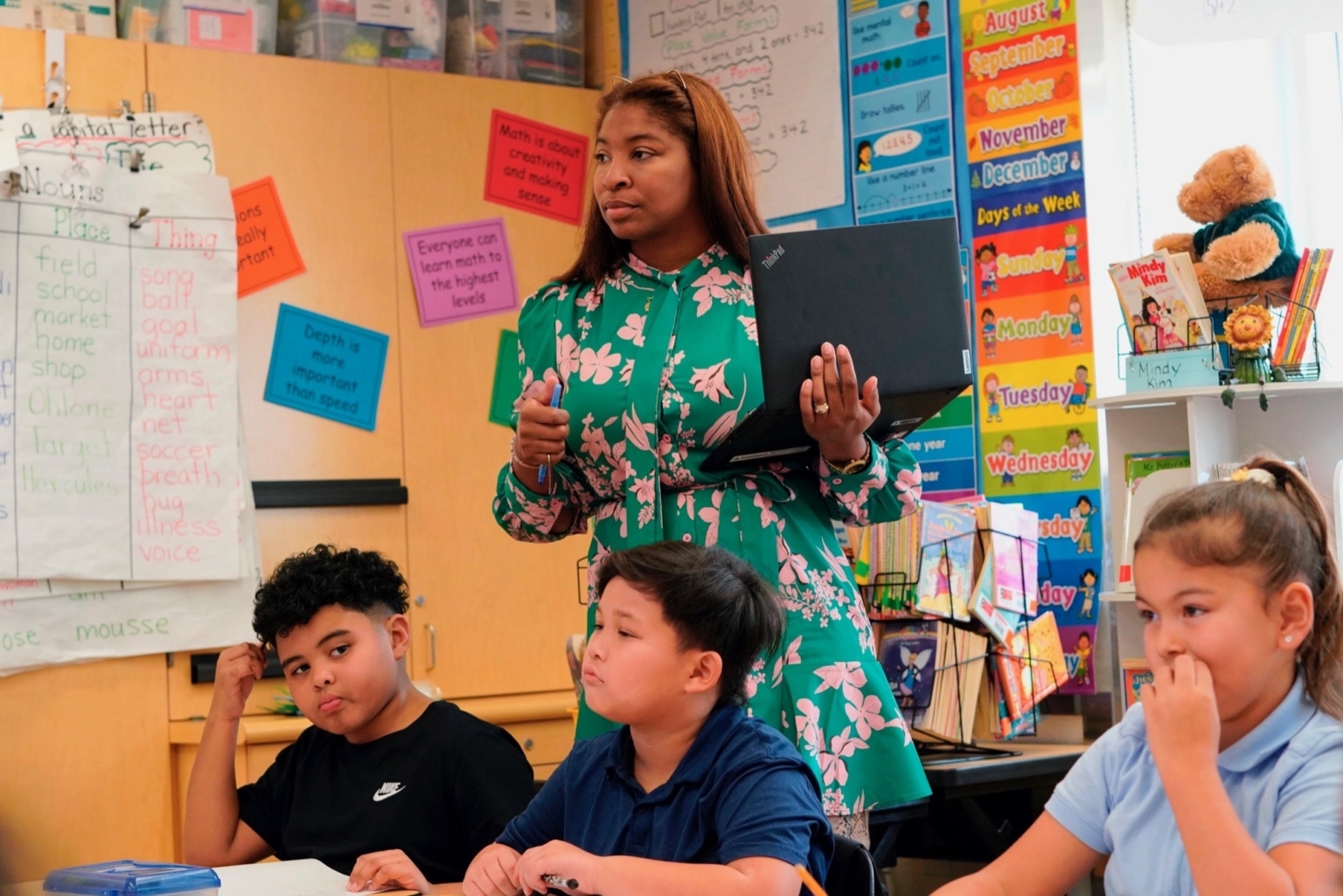
If you want to understand why student outcomes have been improving at Ohlone Elementary, year after year, start by listening to the school’s main cheerleader.
Principal Delisia Davis leads with recognition, not rallies, and with what she calls a “praise-push” balance. This energy, a deliberate, infectious belief that every student can and will succeed, isn’t motivational rhetoric. It is a key element for a school that, for three consecutive years, has turned steady student achievement gains into a district-leading breakthrough.
The numbers tell a clear story. In math, the percentage of students meeting or exceeding standards has climbed from 51% to 64% over three years, while those not meeting standards have been cut in half, dropping from 24% to just 12%. The ten-point jump in math last year was the highest in the entire West Contra Costa Unified School District.
In English Language Arts, the trend is similarly upward: the percentage of students meeting standards climbed twelve points over three years, from 56% to 68%, while the number of students falling behind dropped by ten points.
Behind this sustained success is a culture of family, though not without occasional disagreements. The expectation is to “call each other in” rather than out. The foundation is transparency and a shared focus on academic excellence for every Ohlone student.
For Principal Davis, the work is grounded in a commitment to academic results for every student, which is built into the school’s systems. “One of the things that we’re doing is we’re getting really intentional about our small group instruction,” Davis said. She points to the district’s initiative to identify and support African American students who are behind. “It’s about the data cycle,” she said. “We keep data at the forefront.”
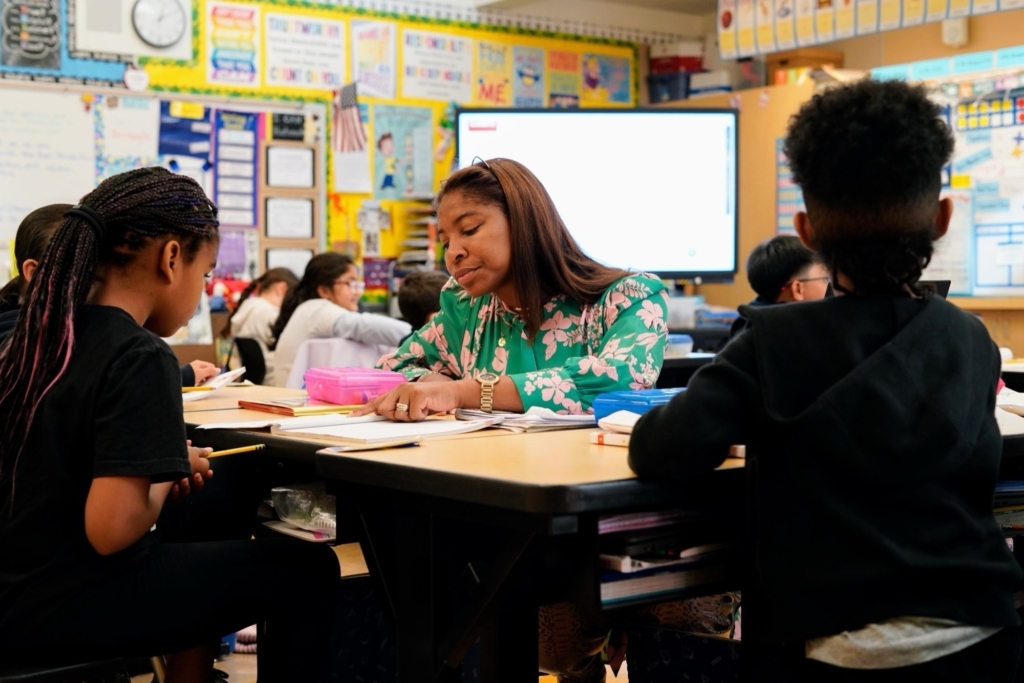
This method of identifying need early and acting on it is a philosophy of planning from the margins. By creating a responsive system for the students who need it most, the school strengthens instruction for everyone.
The impact of this approach is definitive. For Ohlone’s Black students, the percentage meeting standards in English Language Arts more than doubled in a single year, from 32% to 68%. This is the greatest rate of growth for Black students in a single year across the district. This result reinforces that achievement for all students is not an anomaly, but the predictable outcome of intentional preparation, strong instruction, and strategic response to data.
A major driver of the math-specific leap is the strategic embrace of the new Eureka Math Squared curriculum, combined with the expertise of the teaching staff. Christine Moran, a veteran second-grade teacher with more than two decades of experience, is the Math Teacher Lead.
Mrs. Moran initially doubted her capacity to coach peers across grade levels. Her breakthrough was the realization she didn’t need to have all the answers; she just needed to show what deep engagement with the material looked like.

“I can bring what I’m teaching right now,” she says. “My manual, my anchor charts, and say, ‘OK, this is what this looked like today in my classroom. This is how I tweaked it.’” This model helped to demystify the curriculum for her colleagues, showing them how to prioritize, internalize, and teach it with integrity.
Collaboration is part of the school’s structure. Teachers dedicate part of their planning time specifically to math, which creates a structured space for reviewing student work, anticipating challenges, and sharing strategies.
The Instructional Leadership Team, which Principal Davis expanded and includes in key decision-making and walk-throughs, operates with what external coach Camille Provencal from Instruction Partners calls “clarity and shared purpose.”
Principal Davis doesn’t just seek their input; she makes them active “change champions,” responsible for the instructional culture. Principal Davis and the Instructional Leadership Team conduct regular classroom walk-throughs using a common tool, creating a consistent language for instruction and moving feedback from subjective opinion to shared observation.
“She isn’t just asking for their input,” Provencal says of Davis. “She’s asking them to actively participate in being change managers. It’s a really beautiful balance. It means everyone is responsible for influencing these improvements.”
That same systematic mindset is applied directly to students who are falling behind. Intervention begins at the first sign of need, not after an assessment, and a continuous data review cycle identifies those needs early. The response is targeted, intentional small-group instruction.
“I always tell the teachers, we don’t wait for a kid to fail,” Davis says. “You already know who is going to pass or fail the test before you give it to them. So with that data, what are you doing with it before the test actually comes?”

An essential aspect of sustaining this momentum has been the four-year partnership with the Chamberlin Education Foundation’s Instructional Leadership Community of Practice (ILCoP) and the coaching from Instruction Partners.
For Principal Davis, the partnership has prevented “mediocrity” from creeping in and provided a framework for the school’s professional learning structures while sharpening her ability to communicate her instructional vision. For Mrs. Moran, the Instructional Practice Guide (IPG) formalized and amplified the practices she valued, such as fostering student ownership and building number sense.
Provencal observes that Davis’s growth has been in refining her innate strengths: “She strikes this balance of affirmation and direction,” Provencal says, “a warm demander approach that feels authentic to her and her team.”
The result is a school that feels, in Davis’s words, “electric,” a feeling that comes from a collective understanding that hard work, aligned with purpose, yields results that everyone in a school can be proud of.
Principal Davis ensures that the celebrations are built into the rhythm of the week: the “Midweek Sunshine” on the yard, the shout-outs in the “Magic Monday” slide deck, the constant, vocal recognition from a principal who believes her role is to be both mirror and amplifier of her staff’s efforts.
Yet Ohlone’s story isn’t about a magical turnaround or a single charismatic leader. It’s a win for collective effort, where veteran teachers like Mrs. Moran find new ways to lead, a principal views herself as the chief instructional coach, and a team that trusts the process, the data, and each other.